

















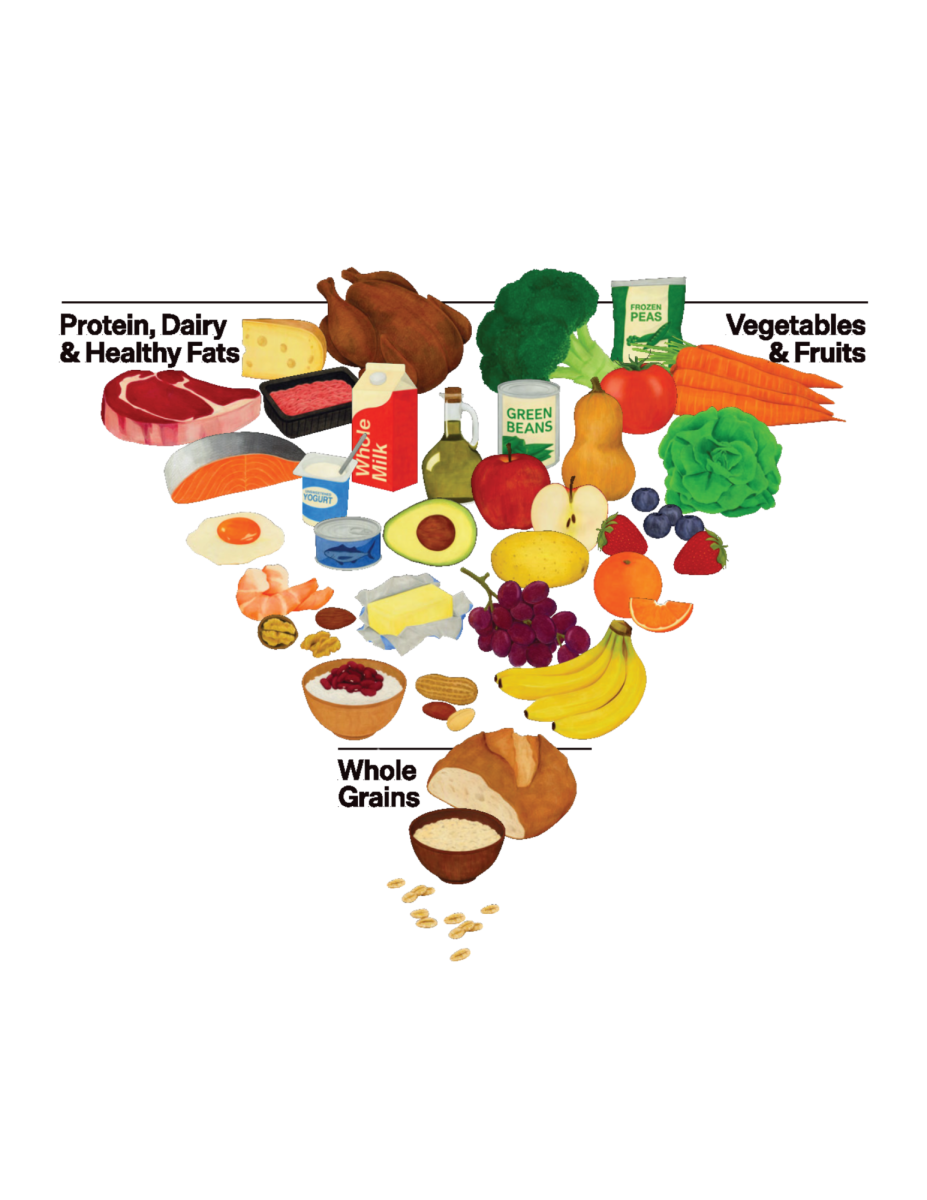
Dietary Guidelines are just guidelines… right? No one really follows them. Wrong. The official Dietary Guidelines for Americans affect you more than you know. If you’ve ever found yourself complaining about school lunches, federal guidelines might be a root cause of your dissatisfaction.
The new 2025-2030 Dietary Guidelines, released in January, will be changing school lunches yet again. These new guidelines are being promoted as having flipped the previous food pyramid from 1992 “upside down,” encouraging “Real Food” diets. Now Americans are told to prioritize nutrient-dense foods such as protein, dairy, produce and healthy fats. This contradicts the previous “MyPlate” guidelines of 2020, which focused on intake of grains and vegetables.

Titan Legacy talked to Julie Denker, Food Service Director of Papillion- LaVistaCommunity Schools, to find out how the new guidelines will affect school-provided breakfast and lunch, along with information about the inner workings of the school cafeteria.
What are the challenges of the new federal guidelines?
Denker: The new 2025–2030 Dietary Guidelines for Americans present a complex challenge by shifting focus toward “real foods” and full-fat dairy. The challenge is the conflict with the 2024 rules … legally bind[ing] schools to a 2027 timeline of gradual sodium and sugar cuts based on low-fat models. The 2025-2030 Dietary Guidelines demand an immediate pivot toward high-quality animal proteins, and total avoidance of the “highly processed” packaged goods that were reformulated specifically to meet the 2024 standards. This creates a “double reformulation” crisis for school meal programs that have already invested in 2027-compliant products, forcing the USDA to decide whether to stay the current course or scrap the existing roadmap for a fundamentally different set of nutritional priorities.
Since the new guidelines suggest more proteins and healthy fats, will the district have to change its food budget to account for these more expensive food groups?
Denker: Yes, over the next few years, we are preparing for a shift toward “protein-first” and healthy fats to the school meal pattern that would require additional meat, or meat alternatives, and whole-fat dairy items at breakfast and lunch. We anticipate an increase of 15% [to] 20% for food and labor expenses. Because these “clean-label” and high-protein foods have a significantly higher production cost than current regulations, these changes will lead to a price increase for a la carte items.
When will we see changes in school lunches?
Denker: The most significant changes will be gradual, and will take years to adjust to new guidance from the USDA. In the 2026-2027 school year, breakfast items will have less added sugars, and all items will be free of added artificial food coloring.
Will favorite foods like chicken nuggets, pizza and pasta still be available?
Denker: There will be a “cleaning up” of menu items as the focus shifts from just meeting the guidelines for calories, fat, sugar, and sodium, to removing ultra-processed foods. Manufacturers will work to reformulate current “heat-and-serve” versions of student favorites, such as chicken nuggets, corn dogs and pizza with less processed versions.
Will the low-fat white, chocolate, and strawberry milks still be served in the cafeteria?
Denker: While we wait for the USDA to provide specific guidance, we will continue to serve a variety of low-fat and fat-free dairy products, including flavored milk.
Who are the food suppliers for PLCS?
Denker: Our suppliers can vary from year to year. For the 2025–2026 school year, we maintain contracts and receive regular, daily, and weekly deliveries from several key partners. These include Performance Food Group, US Foods, Greenberg Fruit Company, and Chesterman Coca-Cola. We also have partnerships with familiar companies including Rotella’s Bakery, Hiland Dairy, Nebraska Star Beef, and Pizza Hut. In addition to these commercial vendors, we receive monthly food deliveries through the USDA Commodity Food Program, which provides 100% American-grown fruits, vegetables, and high-quality meats to support both student nutrition and American agricultural producers.
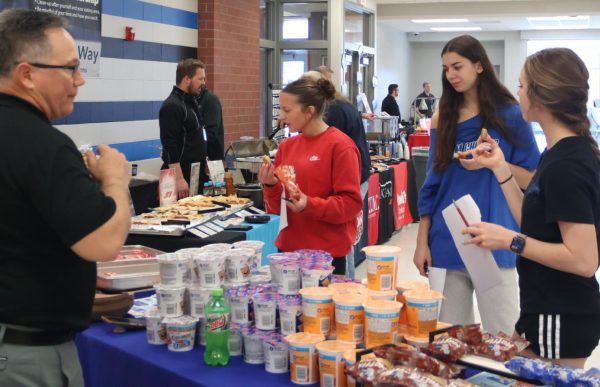
How much food-prep does the kitchen staff do?
Denker: Food delivered includes prepacked/precooked foods, frozen roll/pizza dough, uncooked pasta, spices, flour, and fresh produce. They can include raw ingredients including beef, pork and poultry items. School kitchens are very busy daily from panning up pre-cooked items, creating large batches of scratch-cooked school recipes from raw ingredients, proofing, baking, and cutting up fresh fruit and vegetables.
How many main courses do lunch rotations have?
Denker: PLCS utilizes a 4-week monthly menu cycle. Menu items like chicken strips are usually not planned on the menu more than once every other week. We do daily offerings of 100% Nebraska Beef grilled burgers, spicy chicken sandwiches, and Pizza Hut pizza slices. …PLCS offers up to 10+ entrée items each day on the High School lunch menu.
What are the regulations for Pizza Hut?
Denker: Several commercial pizza chains, including Pizza Hut, have developed pizza that can be part of the schools’ meal programs to meet the USDA guidelines. Each slice of commercial pizza must meet the 2 oz. grain requirement, and the 2 oz. meat/meat alternate requirement. PLCS averages 90 boxes of pizza daily at each High School.
Why are there no other food corporations like Pizza Hut being served at the high schools?
Denker: Choosing outside vendors is a challenge because every partner must strictly follow USDA school meal guidelines. Most local restaurants and vendors find it difficult, or too expensive to change their recipes just for school lunch service. While Pizza Hut provides a specific “school-compliant” pizza that meets these federal rules, other vendors often lack the specialized ingredients, or the staff, to provide the detailed nutritional data we are required to track. Additionally, we must follow a competitive bidding process to ensure we are using taxpayer and federal funds responsibly.
What are the regulations on a la carte foods (chips, cookies, and drinks)?
Denker: Any a la carte items sold (chips, cookies, drinks, etc.) must meet Smart Snack guidelines, which require the first ingredient to be a whole grain, fruit, vegetable or protein. Guidelines limit snacks to 200 calories, 200 milligrams of sodium, and no more than 35% of calories from fat or sugar.
How will the 2025-2030 Dietary Guidelines affect a la carte items?
Denker: Our district is committed to supporting our students’ health by actively trying to find and introduce new a la carte products that align with the Dietary Guidelines’ emphasis on cleaner labels, higher protein and healthy fats. As manufacturers reformulate their items to meet these stricter federal standards, and move away from “highly processed” ingredients, we will strive to update our menu.
What else do you think people should understand about the effects of the revised federal food pyramid?
Denker: Right now, we are in a bit of a “waiting game” while the USDA works out the exact rules for how the new 2025–2030 Dietary Guidelines will change our school menus. …Balancing these complex federal rules with a team of over 100 people and a large district budget is a challenge, especially as we upgrade our kitchens to increase cooking from scratch. We anticipate that as manufacturers adapt their products to meet these new standards, it will lead to a price increase for students because these nutrient-dense, minimally processed foods often have a higher “per-unit” cost. …No matter what the final rules look like, we will make it work. Our goal remains simple: ensuring our students have access to fresh, “real-food” every day so they can learn.